Meet the Sky-Blue Luna: On Joy as a Guiding Principle For Life

Advertisements
Day 1 with Luna

World: meet Luna, my celestial blue bike. If you follow my Instagram, you know I am enthusiastic about riding in Atlanta. So as a Valentine’s Day gift to myself, I splurged on new wheels. Physically, the bike elevates my power on rides. Spiritually, the bike is a conduit for joy. And, well, Luna is beautiful. As I ride, weaving around potholes and through alleys, I am grateful for the time I made for frolicking in the city. When I ride with a group, I sense camaraderie with other cyclists. Post-cruise, my endorphins run high, and I feel invigorated. In this way, adding the bike Luna to my life is an act of nurturing joy.

I believe we are in a constant state of becoming our true selves. Therefore, I experiment with myself to hone in on what vibes with me at a deeper level. Many self-growth writers focus on how to correct imperfections. Instead, my approach is to double down on the good stuff. First, I use bliss as my bellwether, and then I lean in. I pay attention to my feelings and then create opportunities to encounter JOY. For example, in 2017, when I decided to move to Tokyo, I followed my joy of travel. While there, I connected with others developing a transnational identity. Being abroad helped me highlight that elemental sense of who I am and brought me closer to encounters with joy. From this and many life lessons, I pursue opportunities for joy as my guiding life principle.

What Joy?

Before going on, let me try the imperfect art of definition. Joy is neither happiness nor bliss. But it is somehow related to both. In Atlas of the Heart, Dr. Brené Brown suggests: “Joy is sudden, unexpected, short-lasting, and high-intensity. It is characterized by connection with others, or with God, nature, or the universe. Joy expands our thinking and attention, and it fills us with a sense of freedom and abandon.”

Joy, then, is like catching a warm ray of sun and appreciating it. Nurturing joy is not simply falling into hedonism. It is more aligned with being an Epicure. It is pausing and enjoying the good things in life with balance and in stride. It is setting the stage for magic. If, as Dr. Brown suggests, joy is fleeting, how can we plan to have more joy in our lives?

White Roses for a Blue BIke

Cultivating Joy

It has taken me years to learn how to integrate joy into my life. It is an inexact art, but I know it begins with the capacity to listen inwards. Here are three practices that have helped me cultivate and follow joy in life:

  1. The Happiness Jar

Over the course of a year, take note of the moments that brought you gratitude. Write them down on a little slip of paper and stick them in the jar. Then, at the end of the year, read and remember those moments. Along the way, you learn what to prioritize.

Last week, for example, a friend of mine reached out because she was in my area, and we went to lunch. It turned into a whole day of hanging out. I added a note about her lovely surprise visit to my happiness jar. Later on, when I reminisce, I will remember how important it is to have unscheduled time for such chance encounters.

Research shows an intriguing link between joy and gratitude (see, again, Atlas of Heart). The trait of gratitude predicts more fantastic future experiences of in-the-moment joy. Joy predicts further experiences of in-the-moment gratitude. And dispositional or situational joy predicts greater future subjective well-being.

Thus, I recommend paying attention to happiness. Over time, this adds to my well-being.

The contents of my 2022 happiness jar
  1. Growing Awareness

Becoming aware of your inner reaction requires silencing outside noise. In that way, we can focus on what resonates with us through sensitivity to perceptions, sensations, and feelings. Awareness helps us notice the beautiful moments in life. Meditation helps grow awareness. Awareness, along with attention, is like a muscle. The more we practice it, the stronger it gets.

  1. Pause to stay with it

My lesson for the joyous moments is to pause and allow the good feelings to sink in. It is a bit like making tiramisu. You place all the good things together. But the most challenging step is to avoid eating it right away once you stack the layers. The best tiramisu hangs and soaks goodness overnight. Then, you have tiramisu infused adequately with patience and deliciousness.

If I am alert to good feelings, I pause consciously to stay with the aura. I might even hold my hand to my heart as if holding the moment close to me.

  1. Practice Opening Your Heart

If all of this is foreign, and you struggle to find joy and happiness, I suggest a mini 12-week course from Julia Cameron. Her book, The Artist’s Way, explores activities to discover your inner creativity. The lessons are not limited to would-be artists. Her lessons are designed to open your heart and senses to learning what makes you feel burning with aliveness. The book combines practices, essays, and quotes bound to ignite our buried inner selves.

Joy Riding

Who Needs Joy?

In Desert Solitaire, American wilderness enthusiast and social critic Edward Abbey wonders why desert frogs sing in the rain.

“Has joy any survival value in the operations of evolution? I suspect that it does; I suspect that the morose and fearful are doomed to quick extinction. Where there is no joy there can be no courage; and without courage all other virtues are useless. Therefore the frogs, the toads, keep on singing even though we know, if they don’t, that the sound of their uproar must surely be luring all the snakes and ringtail cats and kit foxes and coyotes and great horned owls toward the scene of their happiness.”

Though it is dangerous, frogs sing, Abbey, surmises it is because they celebrate life. I agree. When we focus on joy, it inspires and moves us. Nurturing joy is an act of self-love and celebration. Being true to yourself and perfecting your love of yourself can be a challenge. Honing in on and growing my inner self through the sharp lens of joy is an antidote to the ups and downs of life. Joy is not only a barometer for the capacity to enjoy life; it is a time-tested route on the path of spiritual enlightenment.

From Joy to Enlightenment

The ancient Hindu wisdom of Sat Chit Ananda reminds us that our bliss, Ananda, is a route to enlightenment. While the world sells us images of external sources of gratification, we can naturally develop a nagging sense of lack. On top of this, modern lifestyle changes add to a growing sense of social isolation. Together, these trends push people away from their inner knowledge. As we make opportunities to learn from joy, we move toward a higher bliss. We rejoice in knowing we always have the capacity for joy, peace, and light.

Joy, then, is the surprise appreciation we develop when magic comes from the mundane. It is at the heart of doing something new, going on an adventure, or a chance meeting with an old friend. On rainy days I find myself longing for the next bit of sunshine. As the sun returns, I take Luna out. Along the way, I will encounter the Phoenix’s rebirth in Atlanta, flora and fauna of the city, the power of my body, and new roads to travel. My heart sings, and my spirit soars over these blue handlebars. Luna and I become adventure partners on a joint joy journey.

A Bridge I Had Not Crossed

Meet the Sky-Blue Luna: On Joy as a Guiding Principle For Life

Advertisements

Day 1 with Luna

World: meet Luna, my celestial blue bike. If you follow my Instagram, you know I am enthusiastic about riding in Atlanta. So as a Valentine’s Day gift to myself, I splurged on new wheels. Physically, the bike elevates my power on rides. Spiritually, the bike is a conduit for joy. And, well, Luna is beautiful. As I ride, weaving around potholes and through alleys, I am grateful for the time I made for frolicking in the city. When I ride with a group, I sense camaraderie with other cyclists. Post-cruise, my endorphins run high, and I feel invigorated. In this way, adding the bike Luna to my life is an act of nurturing joy.


I believe we are in a constant state of becoming our true selves. Therefore, I experiment with myself to hone in on what vibes with me at a deeper level. Many self-growth writers focus on how to correct imperfections. Instead, my approach is to double down on the good stuff. First, I use bliss as my bellwether, and then I lean in. I pay attention to my feelings and then create opportunities to encounter JOY. For example, in 2017, when I decided to move to Tokyo, I followed my joy of travel. While there, I connected with others developing a transnational identity. Being abroad helped me highlight that elemental sense of who I am and brought me closer to encounters with joy. From this and many life lessons, I pursue opportunities for joy as my guiding life principle.

What Joy?

Before going on, let me try the imperfect art of definition. Joy is neither happiness nor bliss. But it is somehow related to both. In Atlas of the Heart, Dr. Brené Brown suggests: “Joy is sudden, unexpected, short-lasting, and high-intensity. It is characterized by connection with others, or with God, nature, or the universe. Joy expands our thinking and attention, and it fills us with a sense of freedom and abandon.”

Joy, then, is like catching a warm ray of sun and appreciating it. Nurturing joy is not simply falling into hedonism. It is more aligned with being an Epicure. It is pausing and enjoying the good things in life with balance and in stride. It is setting the stage for magic. If, as Dr. Brown suggests, joy is fleeting, how can we plan to have more joy in our lives?

White Roses for a Blue BIke

Cultivating Joy

It has taken me years to learn how to integrate joy into my life. It is an inexact art, but I know it begins with the capacity to listen inwards. Here are three practices that have helped me cultivate and follow joy in life:

  1. The Happiness Jar

Over the course of a year, take note of the moments that brought you gratitude. Write them down on a little slip of paper and stick them in the jar. Then, at the end of the year, read and remember those moments. Along the way, you learn what to prioritize.

Last week, for example, a friend of mine reached out because she was in my area, and we went to lunch. It turned into a whole day of hanging out. I added a note about her lovely surprise visit to my happiness jar. Later on, when I reminisce, I will remember how important it is to have unscheduled time for such chance encounters.

Research shows an intriguing link between joy and gratitude (see, again, Atlas of Heart). The trait of gratitude predicts more fantastic future experiences of in-the-moment joy. Joy predicts further experiences of in-the-moment gratitude. And dispositional or situational joy predicts greater future subjective well-being.

Thus, I recommend paying attention to happiness. Over time, this adds to my well-being.

The contents of my 2022 happiness jar

  1. Growing Awareness

Becoming aware of your inner reaction requires silencing outside noise. In that way, we can focus on what resonates with us through sensitivity to perceptions, sensations, and feelings. Awareness helps us notice the beautiful moments in life. Meditation helps grow awareness. Awareness, along with attention, is like a muscle. The more we practice it, the stronger it gets.

  1. Pause to stay with it

My lesson for the joyous moments is to pause and allow the good feelings to sink in. It is a bit like making tiramisu. You place all the good things together. But the most challenging step is to avoid eating it right away once you stack the layers. The best tiramisu hangs and soaks goodness overnight. Then, you have tiramisu infused adequately with patience and deliciousness.

If I am alert to good feelings, I pause consciously to stay with the aura. I might even hold my hand to my heart as if holding the moment close to me.

  1. Practice Opening Your Heart

If all of this is foreign, and you struggle to find joy and happiness, I suggest a mini 12-week course from Julia Cameron. Her book, The Artist’s Way, explores activities to discover your inner creativity. The lessons are not limited to would-be artists. Her lessons are designed to open your heart and senses to learning what makes you feel burning with aliveness. The book combines practices, essays, and quotes bound to ignite our buried inner selves.

Joy Riding

Who Needs Joy?

In Desert Solitaire, American wilderness enthusiast and social critic Edward Abbey wonders why desert frogs sing in the rain.

“Has joy any survival value in the operations of evolution? I suspect that it does; I suspect that the morose and fearful are doomed to quick extinction. Where there is no joy there can be no courage; and without courage all other virtues are useless. Therefore the frogs, the toads, keep on singing even though we know, if they don’t, that the sound of their uproar must surely be luring all the snakes and ringtail cats and kit foxes and coyotes and great horned owls toward the scene of their happiness.”

Though it is dangerous, frogs sing, Abbey, surmises it is because they celebrate life. I agree. When we focus on joy, it inspires and moves us. Nurturing joy is an act of self-love and celebration. Being true to yourself and perfecting your love of yourself can be a challenge. Honing in on and growing my inner self through the sharp lens of joy is an antidote to the ups and downs of life. Joy is not only a barometer for the capacity to enjoy life; it is a time-tested route on the path of spiritual enlightenment.

From Joy to Enlightenment

The ancient Hindu wisdom of Sat Chit Ananda reminds us that our bliss, Ananda, is a route to enlightenment. While the world sells us images of external sources of gratification, we can naturally develop a nagging sense of lack. On top of this, modern lifestyle changes add to a growing sense of social isolation. Together, these trends push people away from their inner knowledge. As we make opportunities to learn from joy, we move toward a higher bliss. We rejoice in knowing we always have the capacity for joy, peace, and light.

Joy, then, is the surprise appreciation we develop when magic comes from the mundane. It is at the heart of doing something new, going on an adventure, or a chance meeting with an old friend. On rainy days I find myself longing for the next bit of sunshine. As the sun returns, I take Luna out. Along the way, I will encounter the Phoenix’s rebirth in Atlanta, flora and fauna of the city, the power of my body, and new roads to travel. My heart sings, and my spirit soars over these blue handlebars. Luna and I become adventure partners on a joint joy journey.

A Bridge I Had Not Crossed

Atlanta, Inc: How to Fail Your Constituents

Advertisements
Atlanta Police

Last year when I returned to Atlanta, I began participating in seminars, conferences, and public hearings. In many ways, the city I returned to looks shinier and hip. Yet, I find myself trying to make sense of Atlanta and why it operates less like a city and more like a corporate playground. As a practicing attorney, I often realized that the legal system is grounded in preserving the interests of the haves over the have-nots. In Atlanta, I see that the city’s actions and policies also have this same predisposition. Community activism and concern for the public good first took me to law school. It inspires me to write, advocate and elevate dissent to this day.

Regarding housing and public safety, I find myself woefully embarrassed by Atlanta, Inc. While Atlanta claims to be “a city too busy to hate,” this is essentially trite lip service. The former home of Dr. Martin Luther King, Jr. overwhelmingly has forgotten the message of economic and social justice. In the decade since I have lived in the city, Atlanta housing has become increasingly expensive, police abuses have escalated, and corporations are continuously placated. Together, these concerns have brought me to re-double my activism in demanding more from city officials.

On Housing

Atlanta Affordable Housing

City Kick Backs to Corporates

While Money magazine concluded that Atlanta is the best place to live in its 2022 list, it also pointed out Atlanta’s failures in housing. At a multi-disciplinary seminar on Atlanta, I heard from globally renowned Urban Studies scholar and Georgia State Professor Dan Immergluck. His new book Red Hot City highlights various LOST opportunities to improve the availability of affordable housing in Atlanta. Consequently, over two decades, Atlanta has intentionally grown whiter and wealthier. Thanks to ill-conceived incentives for developers, Atlanta has deprived its public coffers. City leadership has lined developers’ wallets with unnecessary incentives like tax credits and kickbacks. To add insult to injury, Atlanta fails to tax commercial properties effectively. In doing so, they deprive the city of funding for well-publicized affordable housing promises. By and large, the product of these stupid policies has been to impoverish public finances, gentrify historically black neighborhoods, and intentionally attract only higher-end developments.

Georgia and the Love of Corporate Landlords

To make matters worse, the largely Republican-backed Georgia legislator is cozy with real estate interests. As a result, Georgia has some of the worst tenant protections in the country. As Georgia is considered largely landlord-friendly, it has attracted institutional investors looking for the easiest way to make money with the lowest overhead. Consequently, the Atlanta housing market has seen an uptick in displacement in neighborhoods targeted by out-of-state investors. Since local jurisdictions are pre-empted from rent stabilization and other tenant reforms, the state has one of the highest rates of evictions in the country. With the changes in the housing market post-pandemic, the situation has gotten worse. There are not enough units available at either affordable or gouging prices. Altogether, Atlanta is a tough rental market for a newly transplanted employee due to its costs and few tenant protections.

On Public Safety

Behind Bullets and Bullshit

Stop Cop City

George Floyd’s murder in 2020 brought a global reckoning for changes in policing. Not long after Black Lives Matter rallies were held across the country, in June 2022, an officer of the Atlanta Police Department (APD) killed Rayshard Brooks, a black man who was trying to sleep in his car at a Wendy’s. Atlanta erupted in righteous protest afterward. The Wendy’s was burned to the ground; the police chief stepped down. Such actions are not new. The APD has consistently eroded the public trust and undermined or neglected to provide for the safety of black and brown residents of Atlanta. Even regional policing authorities have used illegal tactics and excessive use of force without substantive consequences.

In the wake of Rayshard’s murder and the countrywide cries to reform policing, Atlanta responded to #DefundthePolice with the exact opposite. Through the Atlanta Police Foundation and corporate backers (see Mainline for an excellent summary of the Atlanta police-prison industrial complex), the creation of a police safety training center was announced. Behind closed doors, in an undemocratic and widely criticized process, police supporters and the Buckhead community agreed to a perverse plan to build this facility on a former prison farm and in a tract of lush forest. This project, dubbed ‘Cop City, ‘ would use millions of precious public funds to build a state-of-the-art facility without addressing how the police will remedy their abuses on black and brown communities.

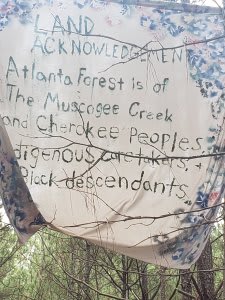
Since Cop City plans were announced, a broad coalition has coalesced in contesting these plans. Environmentalists, abolitionists, and community advocates have taken to the forest to protect it from development. Tensions have escalated since the plan was announced in 2021. Police-led raids of the forest have intentionally destroyed a community kitchen, campsites, and a mutual-aid operation. In December 2022, a protestor was murdered by police in the Atlanta Forest. While some agencies wear body cameras, no agency has provided the public with body camera footage. Despite training and equipment, the police again have failed Atlanta’s citizens.

In response, Cop City protestors held a rally in downtown Atlanta. In one of the country’s most surveilled cities, the police grabbed up random protestors and charged them with being `domestic terrorists.` The state agencies charged and funded to protect the community are working to terrorize the public. While it is unlikely the domestic terrorism charges will stick, they may have quelled some first-amendment dissent. In light of the repeated failures of policing in Atlanta, it is comical that Atlanta police agencies should deign to train other police officers.

Part of Atlanta Forest

Atlanta: Rooms for Improvement

Atlanta has some new bikeable paths and a few posh multi-use developments. Still, it seems that the city is more interested in boosterism for developers and corporations than the fate of its public. Instead of falling into despair, I focus on hope and a vision to work on progressive changes in Atlanta. In my attempts to jump into opportunities to improve the city, I have found unique and exciting opportunities to contribute.

In my return to Atlanta, I found many more ideologically aligned organizations doing good work. These inspire me to collaborate and create a path for a better city. For example, the Housing Justice League does community empowerment training for eviction defense and follows legislative reform at the state level. Beyond that, Atlanta is rewriting its zoning code. This is just one of several steps to help solve the housing affordability issue.

On the issues of public safety, there is no good reason to build YET another police training facility. Various interests compound to illustrate why Cop City should never be built. Instead of diverting funding from police, my hometown wants to eliminate a precious green space for a corporate-funded police playground. To that end, numerous organizations are fighting for justice. Community Movement Builders, a group aligned with the dissent against Cop City, recently trained legal observers with the help of the National Lawyers Guild.

Advocacy for sound policy and justice requires the courage to lead and take chances. Atlanta has always been a city of hustle and corporate climbing. I am reminded that the premise behind governance is the public good. Occasionally our public officials need to hear the citizenry to remind them. Only in this way can we expect accountability for the work of providing for all its citizens.

If you are interested in following along in my activism, please follow me on Twitter.

Atlanta, Inc: How to Fail Your Constituents

Advertisements

Atlanta Police

Last year when I returned to Atlanta, I began participating in seminars, conferences, and public hearings. In many ways, the city I returned to looks shinier and hip. Yet, I find myself trying to make sense of Atlanta and why it operates less like a city and more like a corporate playground. As a practicing attorney, I often realized that the legal system is grounded in preserving the interests of the haves over the have-nots. In Atlanta, I see that the city’s actions and policies also have this same predisposition. Community activism and concern for the public good first took me to law school. It inspires me to write, advocate and elevate dissent to this day.


Regarding housing and public safety, I find myself woefully embarrassed by Atlanta, Inc. While Atlanta claims to be “a city too busy to hate,” this is essentially trite lip service. The former home of Dr. Martin Luther King, Jr. overwhelmingly has forgotten the message of economic and social justice. In the decade since I have lived in the city, Atlanta housing has become increasingly expensive, police abuses have escalated, and corporations are continuously placated. Together, these concerns have brought me to re-double my activism in demanding more from city officials.


On Housing

Atlanta Affordable Housing


City Kick Backs to Corporates

While Money magazine concluded that Atlanta is the best place to live in its 2022 list, it also pointed out Atlanta’s failures in housing. At a multi-disciplinary seminar on Atlanta, I heard from globally renowned Urban Studies scholar and Georgia State Professor Dan Immergluck. His new book Red Hot City highlights various LOST opportunities to improve the availability of affordable housing in Atlanta. Consequently, over two decades, Atlanta has intentionally grown whiter and wealthier. Thanks to ill-conceived incentives for developers, Atlanta has deprived its public coffers. City leadership has lined developers’ wallets with unnecessary incentives like tax credits and kickbacks. To add insult to injury, Atlanta fails to tax commercial properties effectively. In doing so, they deprive the city of funding for well-publicized affordable housing promises. By and large, the product of these stupid policies has been to impoverish public finances, gentrify historically black neighborhoods, and intentionally attract only higher-end developments.


Georgia and the Love of Corporate Landlords


To make matters worse, the largely Republican-backed Georgia legislator is cozy with real estate interests. As a result, Georgia has some of the worst tenant protections in the country. As Georgia is considered largely landlord-friendly, it has attracted institutional investors looking for the easiest way to make money with the lowest overhead. Consequently, the Atlanta housing market has seen an uptick in displacement in neighborhoods targeted by out-of-state investors. Since local jurisdictions are pre-empted from rent stabilization and other tenant reforms, the state has one of the highest rates of evictions in the country. With the changes in the housing market post-pandemic, the situation has gotten worse. There are not enough units available at either affordable or gouging prices. Altogether, Atlanta is a tough rental market for a newly transplanted employee due to its costs and few tenant protections.


On Public Safety

Behind Bullets and Bullshit

Stop Cop City

George Floyd’s murder in 2020 brought a global reckoning for changes in policing. Not long after Black Lives Matter rallies were held across the country, in June 2022, an officer of the Atlanta Police Department (APD) killed Rayshard Brooks, a black man who was trying to sleep in his car at a Wendy’s. Atlanta erupted in righteous protest afterward. The Wendy’s was burned to the ground; the police chief stepped down. Such actions are not new. The APD has consistently eroded the public trust and undermined or neglected to provide for the safety of black and brown residents of Atlanta. Even regional policing authorities have used illegal tactics and excessive use of force without substantive consequences.


In the wake of Rayshard’s murder and the countrywide cries to reform policing, Atlanta responded to #DefundthePolice with the exact opposite. Through the Atlanta Police Foundation and corporate backers (see Mainline for an excellent summary of the Atlanta police-prison industrial complex), the creation of a police safety training center was announced. Behind closed doors, in an undemocratic and widely criticized process, police supporters and the Buckhead community agreed to a perverse plan to build this facility on a former prison farm and in a tract of lush forest. This project, dubbed ‘Cop City, ‘ would use millions of precious public funds to build a state-of-the-art facility without addressing how the police will remedy their abuses on black and brown communities.


Since Cop City plans were announced, a broad coalition has coalesced in contesting these plans. Environmentalists, abolitionists, and community advocates have taken to the forest to protect it from development. Tensions have escalated since the plan was announced in 2021. Police-led raids of the forest have intentionally destroyed a community kitchen, campsites, and a mutual-aid operation. In December 2022, a protestor was murdered by police in the Atlanta Forest. While some agencies wear body cameras, no agency has provided the public with body camera footage. Despite training and equipment, the police again have failed Atlanta’s citizens.


In response, Cop City protestors held a rally in downtown Atlanta. In one of the country’s most surveilled cities, the police grabbed up random protestors and charged them with being `domestic terrorists.` The state agencies charged and funded to protect the community are working to terrorize the public. While it is unlikely the domestic terrorism charges will stick, they may have quelled some first-amendment dissent. In light of the repeated failures of policing in Atlanta, it is comical that Atlanta police agencies should deign to train other police officers.

Part of Atlanta Forest

Atlanta: Rooms for Improvement


Atlanta has some new bikeable paths and a few posh multi-use developments. Still, it seems that the city is more interested in boosterism for developers and corporations than the fate of its public. Instead of falling into despair, I focus on hope and a vision to work on progressive changes in Atlanta. In my attempts to jump into opportunities to improve the city, I have found unique and exciting opportunities to contribute.

In my return to Atlanta, I found many more ideologically aligned organizations doing good work. These inspire me to collaborate and create a path for a better city. For example, the Housing Justice League does community empowerment training for eviction defense and follows legislative reform at the state level. Beyond that, Atlanta is rewriting its zoning code. This is just one of several steps to help solve the housing affordability issue.


On the issues of public safety, there is no good reason to build YET another police training facility. Various interests compound to illustrate why Cop City should never be built. Instead of diverting funding from police, my hometown wants to eliminate a precious green space for a corporate-funded police playground. To that end, numerous organizations are fighting for justice. Community Movement Builders, a group aligned with the dissent against Cop City, recently trained legal observers with the help of the National Lawyers Guild.


Advocacy for sound policy and justice requires the courage to lead and take chances. Atlanta has always been a city of hustle and corporate climbing. I am reminded that the premise behind governance is the public good. Occasionally our public officials need to hear the citizenry to remind them. Only in this way can we expect accountability for the work of providing for all its citizens.


If you are interested in following along in my activism, please follow me on Twitter.


Home: Sweet Home

Advertisements

Home: Sweet Home

You can live in a tiny house, a mansion, or even in the woods. Any of these can be a home. Home has a special place in the heart and in the law. Both our idiom of “Home sweet home” and the ideas behind stand your ground defense share their foundation in the specialness of home. Well, what exactly is it? What takes a house and makes it a home? I want to understand the feeling that comes over me when I arrive home. So, searching for answers to this question, I began contemplating what it takes to make a home.

Last year, in early 2022, I was in Hawaii, checking out what it would be like to make a home there. I ditched that idea after a 3-month stint in paradise.  Then, in April 2022, after stopping in Tokyo to pick up my belongings, I returned to my hometown Atlanta. As I searched Atlanta for a place to make my own, I lived with my family. During the last few months of 2022, I bought a townhouse; now, I am making it a home. I have come to see these essentials in a home:  a sacred physical space, an aliveness, a place of belonging, and a sense of safety.

Waking Up in a Westphalia: Adventures

The Sticks, Bricks, or Stones

Inside the classic American home, there are perhaps two adults and maybe two kids. The family living in the traditional American home and their possessions are the second element of a home. They are the aliveness. Not the number of bathrooms nor the tile backsplash, but the gathered little details of daily life bring a place alive. A house needs activity to be a home. A home is a place that celebrates and supports the lives of the people living there. It is easy to note the absence of homeliness in an austere Airbnb or a poorly staged home for sale. They are spaces without a living, pulsing component. A home’s lived-in-ness is my favorite visual feature of a house. The toiletries, book collection, and mementos bring home alive. Those little lived-in details like an out-of-place coffee mug and family photos make a house a home.

Beyond the physical space and life items in it, two psychological aspects make a house a home. A sense of belonging is the first. This is home where the heart is. The idea that you can be who you are. That mental sense that you belong. Whether in the family or with roommates, that sense of relaxation in your surroundings. A home is where you can be comfortable in your skin. It is a place to recharge your spirit from the trials of life. I think people mean this when they recite “home sweet home.” It is coming, physically and metaphorically, into a place of love.

Patio over Courtyard

Take Off Your Boots

The building is in place, life knick-knacks included, a big heartful family is there, the last element to make a house a home is a sense of safety. It is precisely this sense of safety that one seeks in a home. For us humans to thrive, we need a safe place. This desire for safety includes knowing that your things will be there when you return. That people will not hurt you at home. Your home will protect you from the elements. It is a feeling that puts you in a state of calm. You can be at ease if you have normally been hyper-vigilant out in the world. The idea is that you can be in your home without being physically accosted, evicted, or bothered.

In this way, what is unnerving about having your home broken into it is a violation of your sacred space. When I visit my mother’s home, I appreciate her physical space. It is an enormous house. Our family photos remind us of the moments we celebrate. While I sense I belong, there is a strange quality at my family home. But it no longer feels safe. In reflecting on what we lost in the burglary last month, it is overwhelmingly the loss of a sense of safety.

In this feeling, then, I feel united with many other Atlantans. I sense the dis-ease around a family behind on rent. I can understand what it would be like to distrust a roommate. It feels odd to have traveled the world with relatively few mishaps and then returning home to so quickly lose a sense of safety. Beyond my immediate family, I find this loss of safety reflected of our country at large.

Hawaii Boat House: Not At Sea

Who is Safe Now?

My eyes are open to a very late recognition.  So many others live without that sense of security. I did not fully appreciate the depth and breadth of the Black Lives Matter movement. At it its crux, I now understand. The lives of so many Americans do not feel safe. I sense that the response is the growth in the abolitionist perspective. Mutual aid and community organizers are moving on this principle. Last month, `authorities` slashed tents and encampments in the South River Forest of Atlanta. The exact entity charged with the social (but not LEGAL duty) to protect is actively working to destroy a sense of safety in south Dekalb. If we do not feel safe in the American status quo, we must unite to create a sense of security. For me, then, this is the pressing question of our times. If life in the natural order is nasty, brutish, and short (according to Rosseau), where is the golden place where we can belong, be safe, and have the physical space to nourish our life activities?

Home: Sweet Home

Advertisements

Home: Sweet Home

You can live in a tiny house, a mansion, or even in the woods. Any of these can be a home. Home has a special place in the heart and in the law. Both our idiom of “Home sweet home” and the ideas behind stand your ground defense share their foundation in the specialness of home. Well, what exactly is it? What takes a house and makes it a home? I want to understand the feeling that comes over me when I arrive home. So, searching for answers to this question, I began contemplating what it takes to make a home.

Last year, in early 2022, I was in Hawaii, checking out what it would be like to make a home there. I ditched that idea after a 3-month stint in paradise.  Then, in April 2022, after stopping in Tokyo to pick up my belongings, I returned to my hometown Atlanta. As I searched Atlanta for a place to make my own, I lived with my family. During the last few months of 2022, I bought a townhouse; now, I am making it a home. I have come to see these essentials in a home:  a sacred physical space, an aliveness, a place of belonging, and a sense of safety.

Waking Up in a Westphalia: Adventures


The Sticks, Bricks, or Stones

Inside the classic American home, there are perhaps two adults and maybe two kids. The family living in the traditional American home and their possessions are the second element of a home. They are the aliveness. Not the number of bathrooms nor the tile backsplash, but the gathered little details of daily life bring a place alive. A house needs activity to be a home. A home is a place that celebrates and supports the lives of the people living there. It is easy to note the absence of homeliness in an austere Airbnb or a poorly staged home for sale. They are spaces without a living, pulsing component. A home’s lived-in-ness is my favorite visual feature of a house. The toiletries, book collection, and mementos bring home alive. Those little lived-in details like an out-of-place coffee mug and family photos make a house a home.

Beyond the physical space and life items in it, two psychological aspects make a house a home. A sense of belonging is the first. This is home where the heart is. The idea that you can be who you are. That mental sense that you belong. Whether in the family or with roommates, that sense of relaxation in your surroundings. A home is where you can be comfortable in your skin. It is a place to recharge your spirit from the trials of life. I think people mean this when they recite “home sweet home.” It is coming, physically and metaphorically, into a place of love.


Patio over Courtyard

Take Off Your Boots

The building is in place, life knick-knacks included, a big heartful family is there, the last element to make a house a home is a sense of safety. It is precisely this sense of safety that one seeks in a home. For us humans to thrive, we need a safe place. This desire for safety includes knowing that your things will be there when you return. That people will not hurt you at home. Your home will protect you from the elements. It is a feeling that puts you in a state of calm. You can be at ease if you have normally been hyper-vigilant out in the world. The idea is that you can be in your home without being physically accosted, evicted, or bothered.

In this way, what is unnerving about having your home broken into it is a violation of your sacred space. When I visit my mother’s home, I appreciate her physical space. It is an enormous house. Our family photos remind us of the moments we celebrate. While I sense I belong, there is a strange quality at my family home. But it no longer feels safe. In reflecting on what we lost in the burglary last month, it is overwhelmingly the loss of a sense of safety.

In this feeling, then, I feel united with many other Atlantans. I sense the dis-ease around a family behind on rent. I can understand what it would be like to distrust a roommate. It feels odd to have traveled the world with relatively few mishaps and then returning home to so quickly lose a sense of safety. Beyond my immediate family, I find this loss of safety reflected of our country at large.

Hawaii Boat House: Not At Sea

Who is Safe Now?

My eyes are open to a very late recognition.  So many others live without that sense of security. I did not fully appreciate the depth and breadth of the Black Lives Matter movement. At it its crux, I now understand. The lives of so many Americans do not feel safe. I sense that the response is the growth in the abolitionist perspective. Mutual aid and community organizers are moving on this principle. Last month, `authorities` slashed tents and encampments in the South River Forest of Atlanta. The exact entity charged with the social (but not LEGAL duty) to protect is actively working to destroy a sense of safety in south Dekalb. If we do not feel safe in the American status quo, we must unite to create a sense of security. For me, then, this is the pressing question of our times. If life in the natural order is nasty, brutish, and short (according to Rosseau), where is the golden place where we can belong, be safe, and have the physical space to nourish our life activities?

DeKalb County Police: Who do you serve?

Advertisements

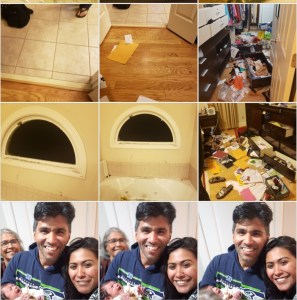
On Monday night, December 19th, I had the misfortune of needing to call the Dekalb County Police to my mother’s house. We (my mother, stepfather, aunt & uncle, and I) had just returned from a joyous gathering where we met my cousin’s newborn daughter Amara, ate a late lunch, laughed, and played cards for a few hours. When we arrived back at my mother’s a bit before 8 pm, we saw that her home had been burglarized. After I called the police, we all anxiously waited downstairs, hoping no burglar remained in the house.

DeKalb County Police

It took over half an hour for the police to arrive. We realized that night that we had lost three generations of unique Indian jewelry, a coin collection, a safe the size of a college fridge, and a lot of faith. My very sense of security is shaken. Beyond that, what I witness in my local law enforcement: the complete lack of urgency, care, and competence, is most shocking. When I combine their response here to  Dekalb County Police actions in the South River Forest on the opposite end of town, I am perplexed. I wonder WHO actually does Dekalb County serve? What JUSTICE does the symbol on their police crest actually represent?

Dekalb County Police: Paid to Do Nothing?

Back to Monday night, the 19th, once the initial two police officers arrived, they did a sweep of our home. After a cursory look around, one of the officers left without notice! No one took photos, walked outside, or fingerprinted the house. I was a bit confused, and as the other Officer, Officer M, left, he gave us a card containing a case number. On the car, conspicuously unfilled on the card, was where Officer M was supposed to provide his PHONE NUMBER. Noticing that, I insisted that Officer M. take my phone number instead, so that at least one line of communication could be established. Luckily, in just a few minutes, Officer M called me to clarify some detail for his report. He happened to be sitting outside the house in his car, and as we talked, he decided to come back inside our home.

On this second entry, I asked Officer M how the burglars entered the home. As we were discussing and trying to figure out how the burglary happened (we had to figure that out ourselves), we decided, by chance, to look at the backyard. We discovered damage to the home’s exterior, where the burglars (presumably) exited and entered the house. Broken ceramic pots and glass shards sprinkled down from the upstairs window. After his second visit to the home, it was only then that Officer M finally called a detective. By now, it was past 10 pm.

After another half hour, a man, presumably the detective on duty, wearing a suit jacket, arrived. This detective did not want to take photos, fingerprints, or blood swabs. I have seen enough Law & Order (in addition to my legal training) to realize we would lose any evidence once the family began cleaning. After locating a few spots of blood over broken glass, we insisted that the detective take at least a blood swab. I actually had to provide the detective with Q-tips, a towel, and a bag so he could collect evidence. Why does a detective have no evidence kit? Beyond the suit jacket, what makes him a detective?  Of course, this detective had no card for us to reach him again.

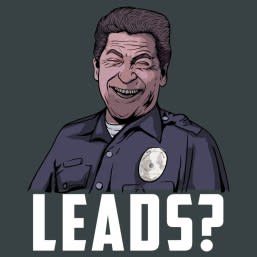
When the two Dekalb Police employees ultimately left us, my family began cleaning. As we did, we wondered how anyone would find the burglars. Without taking photos, evidence, or inspiring any shred of faith in their capacity, I wondered how (if at all) the Dekalb County Police would even try to bring my family justice. They would not take photos nor make any substantive effort to document the condition of my mother’s home. I was left with a card saying a police report would be available in a few days and still maybe longer for a different detective to be assigned to the case. Hanging over us, their overall aura of nonchalance was excruciating. In the four days since, there has been rainy and stormy weather. All traces of blood and any further evidence are gone. Meanwhile, I suspect our family jewelry is getting fenced or re-gifted. Our family still has no assigned detective. We have received no follow-up and no leads. I feel a bit like the Dude in the Big Lebowski. Finally, I realized I would have to do some legwork myself.

Dekalb Police: Hired Guns for Developers?

On the other end of town, a much longer yarn has been brewing. On Saturday, immediately preceding the robbery, I attended a solidarity bike ride and rally for the #DefendtheForest movement working to #StopCopCity. The weekend event was a response to Dekalb County Police entering the forest the week before and slashing campers’ tents. Later, the Dekalb County Police arrested tree-sitters and charged them with domestic terrorism. Sending Dekalb County Police to disrupt peaceful protests (on a public park and a mutual aid operation) is a jarring escalation in a long-running dispute. A representative of the Atlanta Solidarity Fund speaks to the sense of shock.

There, at Intrenchment Creek Park, where environmental justice meets economic exploitation, in the less affluent section of Dekalb County, public resources are being spent to further the interests of a developer. Dekalb County tried to pull off a shady land deal with Blackhall Studios. While there is ongoing litigation, an agreement to prevent further destruction of the park is ignored. It appears that Dekalb County Officials are lackadaisical in enforcing the agreement prohibiting Blackhall Studios from working on the property while litigation is pending. Again, who does the Dekalb County Police serve?

What about us?

I suppose I have been a little confused lately. What exactly are our public services for? In the wake of George Floyd’s death, I heard many calls to `Defund the Police.`  I did not fully understand the force behind the idea. Now, I have a direct and personal understanding of the sentiment. While I was on the fence about the idea, I am coming along to appreciate the validity of some abolitionist arguments. I want my local taxes to improve social services and grow the community. I do not see why the police need militarized training and weapons when they won’t bother to do basic investigations and de-escalate conflicts. What exactly is accomplished in having police run around in the newest version of SUVs? Why is this where my money goes?

In dealing with this crime, I have turned into our family detective. First, I traced the entryway of the burglars into our home. With the assistance of my neighbors, I pinpointed when the lights came on at our house (while we were not home). Finally, I am keeping an eye out for online sales of potentially fenced jewelry. I managed to do all this while still waiting for updates and even the assignment of an actual detective from Dekalb County Police. Mainly I want to know where is the moral compass behind this agency. Who there is now inspiring any bit of trust?

The Contrast In My Photos Gallery

As I have returned to Atlanta, the kind of crime and drama I notice are incomprehensible. It often feels like I have come from the 1st world in Japan to Atlanta, a war-torn developing country. In Tokyo, I have a lovely memory of a police officer helping me pump air into my bike tires. In Atlanta, I mainly see cops gathered around coffee and donuts. Instead of public institutions, I have turned to my local community. My neighborhood association and the kindness of my larger community are helping me investigate and heal. Please follow along as I witness what goes on in my hometown.

Further Reading

Others also seem discontented over Dekalb’s Leadership:

https://www.wsbtv.com/news/local/dekalb-county/business-owners-want-dekalb-leaders-do-something-about-crimes-committed-against-them/REHLLCYK2VCJNOXGQUA73WWQVI/

Latest procedural action in the citizen’s action against the disputed land swap (as of 12/23/22). Emergency Request for TRO on Forest Land

DeKalb County Police: Who do you serve?

Advertisements

On Monday night, December 19th, I had the misfortune of needing to call the Dekalb County Police to my mother’s house. We (my mother, stepfather, aunt & uncle, and I) had just returned from a joyous gathering where we met my cousin’s newborn daughter Amara, ate a late lunch, laughed, and played cards for a few hours. When we arrived back at my mother’s a bit before 8 pm, we saw that her home had been burglarized. After I called the police, we all anxiously waited downstairs, hoping no burglar remained in the house.

DeKalb County Police

It took over half an hour for the police to arrive. We realized that night that we had lost three generations of unique Indian jewelry, a coin collection, a safe the size of a college fridge, and a lot of faith. My very sense of security is shaken. Beyond that, what I witness in my local law enforcement: the complete lack of urgency, care, and competence, is most shocking. When I combine their response here to  Dekalb County Police actions in the South River Forest on the opposite end of town, I am perplexed. I wonder WHO actually does Dekalb County serve? What JUSTICE does the symbol on their police crest actually represent?


Dekalb County Police: Paid to Do Nothing?

Back to Monday night, the 19th, once the initial two police officers arrived, they did a sweep of our home. After a cursory look around, one of the officers left without notice! No one took photos, walked outside, or fingerprinted the house. I was a bit confused, and as the other Officer, Officer M, left, he gave us a card containing a case number. On the car, conspicuously unfilled on the card, was where Officer M was supposed to provide his PHONE NUMBER. Noticing that, I insisted that Officer M. take my phone number instead, so that at least one line of communication could be established. Luckily, in just a few minutes, Officer M called me to clarify some detail for his report. He happened to be sitting outside the house in his car, and as we talked, he decided to come back inside our home.

On this second entry, I asked Officer M how the burglars entered the home. As we were discussing and trying to figure out how the burglary happened (we had to figure that out ourselves), we decided, by chance, to look at the backyard. We discovered damage to the home’s exterior, where the burglars (presumably) exited and entered the house. Broken ceramic pots and glass shards sprinkled down from the upstairs window. After his second visit to the home, it was only then that Officer M finally called a detective. By now, it was past 10 pm.

After another half hour, a man, presumably the detective on duty, wearing a suit jacket, arrived. This detective did not want to take photos, fingerprints, or blood swabs. I have seen enough Law & Order (in addition to my legal training) to realize we would lose any evidence once the family began cleaning. After locating a few spots of blood over broken glass, we insisted that the detective take at least a blood swab. I actually had to provide the detective with Q-tips, a towel, and a bag so he could collect evidence. Why does a detective have no evidence kit? Beyond the suit jacket, what makes him a detective?  Of course, this detective had no card for us to reach him again.


When the two Dekalb Police employees ultimately left us, my family began cleaning. As we did, we wondered how anyone would find the burglars. Without taking photos, evidence, or inspiring any shred of faith in their capacity, I wondered how (if at all) the Dekalb County Police would even try to bring my family justice. They would not take photos nor make any substantive effort to document the condition of my mother’s home. I was left with a card saying a police report would be available in a few days and still maybe longer for a different detective to be assigned to the case. Hanging over us, their overall aura of nonchalance was excruciating. In the four days since, there has been rainy and stormy weather. All traces of blood and any further evidence are gone. Meanwhile, I suspect our family jewelry is getting fenced or re-gifted. Our family still has no assigned detective. We have received no follow-up and no leads. I feel a bit like the Dude in the Big Lebowski. Finally, I realized I would have to do some legwork myself.


Dekalb Police: Hired Guns for Developers?

On the other end of town, a much longer yarn has been brewing. On Saturday, immediately preceding the robbery, I attended a solidarity bike ride and rally for the #DefendtheForest movement working to #StopCopCity. The weekend event was a response to Dekalb County Police entering the forest the week before and slashing campers’ tents. Later, the Dekalb County Police arrested tree-sitters and charged them with domestic terrorism. Sending Dekalb County Police to disrupt peaceful protests (on a public park and a mutual aid operation) is a jarring escalation in a long-running dispute. A representative of the Atlanta Solidarity Fund speaks to the sense of shock.

There, at Intrenchment Creek Park, where environmental justice meets economic exploitation, in the less affluent section of Dekalb County, public resources are being spent to further the interests of a developer. Dekalb County tried to pull off a shady land deal with Blackhall Studios. While there is ongoing litigation, an agreement to prevent further destruction of the park is ignored. It appears that Dekalb County Officials are lackadaisical in enforcing the agreement prohibiting Blackhall Studios from working on the property while litigation is pending. Again, who does the Dekalb County Police serve?

What about us?

I suppose I have been a little confused lately. What exactly are our public services for? In the wake of George Floyd’s death, I heard many calls to `Defund the Police.`  I did not fully understand the force behind the idea. Now, I have a direct and personal understanding of the sentiment. While I was on the fence about the idea, I am coming along to appreciate the validity of some abolitionist arguments. I want my local taxes to improve social services and grow the community. I do not see why the police need militarized training and weapons when they won’t bother to do basic investigations and de-escalate conflicts. What exactly is accomplished in having police run around in the newest version of SUVs? Why is this where my money goes?


In dealing with this crime, I have turned into our family detective. First, I traced the entryway of the burglars into our home. With the assistance of my neighbors, I pinpointed when the lights came on at our house (while we were not home). Finally, I am keeping an eye out for online sales of potentially fenced jewelry. I managed to do all this while still waiting for updates and even the assignment of an actual detective from Dekalb County Police. Mainly I want to know where is the moral compass behind this agency. Who there is now inspiring any bit of trust?

The Contrast In My Photos Gallery

As I have returned to Atlanta, the kind of crime and drama I notice are incomprehensible. It often feels like I have come from the 1st world in Japan to Atlanta, a war-torn developing country. In Tokyo, I have a lovely memory of a police officer helping me pump air into my bike tires. In Atlanta, I mainly see cops gathered around coffee and donuts. Instead of public institutions, I have turned to my local community. My neighborhood association and the kindness of my larger community are helping me investigate and heal. Please follow along as I witness what goes on in my hometown.


Further Reading

Others also seem discontented over Dekalb’s Leadership:

https://www.wsbtv.com/news/local/dekalb-county/business-owners-want-dekalb-leaders-do-something-about-crimes-committed-against-them/REHLLCYK2VCJNOXGQUA73WWQVI/

Latest procedural action in the citizen’s action against the disputed land swap (as of 12/23/22). Emergency Request for TRO on Forest Land


An Atlanta Story: Bikes Howling Into the Moon as Cars are Stuck

Advertisements

Falling in Love with Cycling

The September Full Moon

At midnight on a late summer Saturday night, hip-hop music emanated from the traffic-jammed cars surrounding me as I traveled west along Edgewood Avenue with a bike posse. On my first group bike ride, I was both excited and nervous. This ride was supposed to make it across town and back (over 10 miles). Most car-driving Atlantans would be rightly terrified of biking this route. Car traffic, hills, and potholes are enough to scare the average Atlantan. While I was safely helmeted and well-lit, without the collective courage of this group, I likely would have stayed in the boring bar where I started my night. On my own, I could not have imagined cycling across Atlanta. But for that September Full Moon ride, I could have lived forever in ignorance and boredom in my own hometown.

Our motley crew comprised a ride leader on roller skates followed by cyclists of every race and age. We snaked our way through bumper-to-bumper clubbing traffic on Edgewood as onlookers stared at us. Occasionally, a cheerful drunk would greet us with a smile and a “HEY there!” More often, though, car drivers actively ignored us. They were stuck in gridlock; we cyclists were free to weave between lanes. This small gloat eased some of my tension.

Along with the heat, enthusiasm began climbing out of me. Without the layers of car steel as separation, the bumping music sent electric pulses through my body. My Saturday night fever grew, and I felt part of the night’s clubby scene. My bike and I connected with the groove and felt like I was dancing along with the city.

A Night Ride from M+M

Watch for Plates, Grates, Poles and Assholes

That night, the road hazards that first presented themselves became more apparent. Car drivers seem either distracted, indifferent, or actively vengeful. As we made our way to the west side of town, the occasional smell of Mary Jane and intermittent car honks punctuated our ride. En route, we encountered a sharp left turn and an immediate incline which slowed us all down. A shiny red Dodge Charger got behind the slowest rider (me) and began revving its engine. The car was less than three feet away and intimidating. When I reached the top of the hill, the Dodge and I were waiting at the same red light. As we were stopped together, I told the driver NICELY that his revving was scary. He laughed and told me he was “playing.” Then, the light turned green, and the Charger rolled up his window and sped off. This driver was driving recklessly. I noted the license plate; the other cyclists were unphased. While he was wrong to drive like that, the flow of the evening was so good. The road called us onwards. I let it roll off me as we caught a pleasant downward hill into the west side of town.

Summerhill Mural

I recalled my high school prohibition from entering this neighborhood. It was not considered safe when I was growing up. Now, here in the West End, was another happening corner. A few cool venues caused slowed car traffic. A whole line of scantily clad ladies was waiting to get inside a club. Meanwhile, crowds poured from parking lots and meandered along sidewalks to bars and clubs. From my bike, the excitement was palpable. That first ride showed me my old town in a new way. The Beltline has impacted the city incredibly by connecting previously segregated parts of town. Now, there are open public spaces to hang out and chill. Walking paths meet with restaurant patios giving  Atlanta a lively and dynamic vibe. I notice this as I remember my readings about legacy residents being displaced by growing rents, especially in southwest Atlanta.

Full Moon Ride November- L5P

Helpful Humans

After we passed the new westside developments, our group found a monster incline around The Gulch. Here I got a real sense of group ride camaraderie. I was sure my clunker of a vintage Schwinn bike was malfunctioning. I found it lying around in my mother’s garage not too long ago. The bike needed TLC, just as I required instruction for going up hills. Oh my god, the HILLS in this town! As I struggled with matching pace with everyone else, I hopped off my bike to push it up the steep incline. A veteran older rider offered to help me. I dismounted and let him take a look at my gear settings. This form of volunteerism was both refreshing and encouraging for me. As I continued to ride, I noticed that there are many good bike Samaritans among the group rides.

No club, dive bar, or café could meet the zest of cycling through Atlanta’s entertainment district on a Saturday night. After the ride, I felt electric. Every cell in my body demanded I dance, move, groove. Thanks to this ride, I felt thoroughly connected and immersed in the city for the first time since my repatriation. While I developed my passion for bike riding in Tokyo, riding where I grew up is a whole new beast. Since that Saturday night, I haven’t seen the city the same way. Since then, I have been hooked.

Get out the Vote Ride (Midweek Roll)

Bikes with the Final Word

Atlanta does not immediately pose herself as a bike-friendly town. The tenor of car driving is aggressive and irreverent towards human life. The public infrastructure is entirely car-based. For the tiny bit of bike infrastructure, there is very little enforcement. Cyclists are left to fend for their own safety. While mutual aid and camaraderie are the natural results of being relegated by the car culture, the future is increasingly anti-car. Cars are pollutants, dangerous to pedestrian safety, and cost us a time tax. They increase the cost of street maintenance, take up too much parking space, and are expensive to maintain. As the city embraces more progressive demands from its residents, the gospel of bike life is spreading. Until then, Atlanta is a car town with an addictive bike habit.

On Boulevard NE and Edgewood Avenue

An Atlanta Story: Bikes Howling Into the Moon as Cars are Stuck

Advertisements

The September Full Moon

At midnight on a late summer Saturday night, hip-hop music emanated from the traffic-jammed cars surrounding me as I traveled west along Edgewood Avenue with a bike posse. On my first group bike ride, I was both excited and nervous. This ride was supposed to make it across town and back (over 10 miles). Most car-driving Atlantans would be rightly terrified of biking this route. Car traffic, hills, and potholes are enough to scare the average Atlantan. While I was safely helmeted and well-lit, without the collective courage of this group, I likely would have stayed in the boring bar where I started my night. On my own, I could not have imagined cycling across Atlanta. But for that September Full Moon ride, I could have lived forever in ignorance and boredom in my own hometown.

Our motley crew comprised a ride leader on roller skates followed by cyclists of every race and age. We snaked our way through bumper-to-bumper clubbing traffic on Edgewood as onlookers stared at us. Occasionally, a cheerful drunk would greet us with a smile and a “HEY there!” More often, though, car drivers actively ignored us. They were stuck in gridlock; we cyclists were free to weave between lanes. This small gloat eased some of my tension.

Along with the heat, enthusiasm began climbing out of me. Without the layers of car steel as separation, the bumping music sent electric pulses through my body. My Saturday night fever grew, and I felt part of the night’s clubby scene. My bike and I connected with the groove and felt like I was dancing along with the city.

A Night Ride from M+M

Watch for Plates, Grates, Poles and Assholes

That night, the road hazards that first presented themselves became more apparent. Car drivers seem either distracted, indifferent, or actively vengeful. As we made our way to the west side of town, the occasional smell of Mary Jane and intermittent car honks punctuated our ride. En route, we encountered a sharp left turn and an immediate incline which slowed us all down. A shiny red Dodge Charger got behind the slowest rider (me) and began revving its engine. The car was less than three feet away and intimidating. When I reached the top of the hill, the Dodge and I were waiting at the same red light. As we were stopped together, I told the driver NICELY that his revving was scary. He laughed and told me he was “playing.” Then, the light turned green, and the Charger rolled up his window and sped off. This driver was driving recklessly. I noted the license plate; the other cyclists were unphased. While he was wrong to drive like that, the flow of the evening was so good. The road called us onwards. I let it roll off me as we caught a pleasant downward hill into the west side of town.


Summerhill Mural

I recalled my high school prohibition from entering this neighborhood. It was not considered safe when I was growing up. Now, here in the West End, was another happening corner. A few cool venues caused slowed car traffic. A whole line of scantily clad ladies was waiting to get inside a club. Meanwhile, crowds poured from parking lots and meandered along sidewalks to bars and clubs. From my bike, the excitement was palpable. That first ride showed me my old town in a new way. The Beltline has impacted the city incredibly by connecting previously segregated parts of town. Now, there are open public spaces to hang out and chill. Walking paths meet with restaurant patios giving  Atlanta a lively and dynamic vibe. I notice this as I remember my readings about legacy residents being displaced by growing rents, especially in southwest Atlanta.

Full Moon Ride November- L5P

Helpful Humans

After we passed the new westside developments, our group found a monster incline around The Gulch. Here I got a real sense of group ride camaraderie. I was sure my clunker of a vintage Schwinn bike was malfunctioning. I found it lying around in my mother’s garage not too long ago. The bike needed TLC, just as I required instruction for going up hills. Oh my god, the HILLS in this town! As I struggled with matching pace with everyone else, I hopped off my bike to push it up the steep incline. A veteran older rider offered to help me. I dismounted and let him take a look at my gear settings. This form of volunteerism was both refreshing and encouraging for me. As I continued to ride, I noticed that there are many good bike Samaritans among the group rides.

No club, dive bar, or café could meet the zest of cycling through Atlanta’s entertainment district on a Saturday night. After the ride, I felt electric. Every cell in my body demanded I dance, move, groove. Thanks to this ride, I felt thoroughly connected and immersed in the city for the first time since my repatriation. While I developed my passion for bike riding in Tokyo, riding where I grew up is a whole new beast. Since that Saturday night, I haven’t seen the city the same way. Since then, I have been hooked.

Get out the Vote Ride (Midweek Roll)

Bikes with the Final Word

Atlanta does not immediately pose herself as a bike-friendly town. The tenor of car driving is aggressive and irreverent towards human life. The public infrastructure is entirely car-based. For the tiny bit of bike infrastructure, there is very little enforcement. Cyclists are left to fend for their own safety. While mutual aid and camaraderie are the natural results of being relegated by the car culture, the future is increasingly anti-car. Cars are pollutants, dangerous to pedestrian safety, and cost us a time tax. They increase the cost of street maintenance, take up too much parking space, and are expensive to maintain. As the city embraces more progressive demands from its residents, the gospel of bike life is spreading. Until then, Atlanta is a car town with an addictive bike habit.


On Boulevard NE and Edgewood Avenue