Pin Pin Karori: Live Long, Die Short!

Advertisements

Updates from Week of June 19: Japanese Wisdom for an American Life

Last Saturday, when finally my fridge ran out of prepared meals, a sweet member of my Boo-Boo crew made an original pasta dish with the ingredients I had at home. We were enjoying his cooking when I casually glanced at my phone and saw a message that my Aunt Sheru was in the hospital with a stroke. She is the beloved aunt who came to my rescue from Toronto and cared for me in my first few days out of the hospital. Sheru Aunty is like my second mother and, hands-down, my favorite family member. Though I could sit up and slowly use a fork with my right hand, I could not help her while she was slightly incoherent at the ICU that night.

Shortly after we got the news, my mother flew to Toronto. I saw my aunt improve over our WhatsApp calls. Talking to her children, my closest cousins, was a jarring experience. I know how devastating it is to see a family member in that condition. On this date last year, I wrote about how this side of the family lost another aunt, my maternal grandmother’s oldest child, Mohabbat Ben. Over the week, my mother became the main news source for my aunt’s condition while I also followed up with Sherr and her kids over video calls. Fortunately, my aunt is improving because she received good medical care right after her husband called for an ambulance. Nonetheless, I found myself hoping for faster relief for my aunt’s body and my sibling-like cousins’ spirits. 

The overall experience has me thinking about health and life and the precarious nature of our existence. It’s so easy to take our health for granted. I remember the Japanese phrase, `Pin-pin karori,` which roughly means to live long and fully, then die quickly. During the years of my ramblings around Tokyo, I could see elderly Japanese living up to this expression. Watching a white-haired senior citizen cycling to the neighborhood vegetable or seafood market was routine. The Japanese elderly would even gather in public parks in the AM to do exercises broadcasted over the radio. The world’s largest senior population suggested there were health lessons right there.

I am the only member of my immediate family who did not enter the healthcare profession. My father was a physician. My mother has run a family medicine practice in Atlanta for nearly 20 years. Her desire to work in the profession drove her back to school while she was a recent immigrant (who was raising two young kids in America). My parent’s ambition for doctors in the family found its fruition in my sister, who sought an education in the Caribbean and later went on to practice at Emory and other hospitals. My other sister Masha works in a busy pharmacy and regularly deals with pharmaceuticals, sick people, and their insurance companies. Our family meals were a great place to glean the bumps and bruises of the American healthcare system. My recent experience as a patient at Grady Hospital sheds plenty of color on the stories around the dinner table. For even deeper insight, just less than two months ago, I attended a board hearing on the finances of the Fulton-Grady health systems as a Documenter.

Thanks to the insights of my experience, I purchased health insurance before I started riding bicycles in Atlanta. The traumas after my accident were partially lighter because I had the money to get health insurance before I purchased Luna (on credit!). In retrospect, next to the purchase of my red Prius, this was the second-best idea I had since returning to America. Modern medicine has revolutionized the way we live. The fact that I was able to get an entirely dislocated foot attached and have the hope for a 100% recovery is a testament to all the advances in trauma care. At the same time, modern medicine fails us in some places and ways. My situation now is a funny reminder of how I joked in at a few nights of standup comedy and moved to Japan to get great health coverage while working as a teacher in Tokyo. Of course, there are many other ways the American healthcare system fails. It disappoints the sick and those working inside of that system.

Photo by Mulyadi on Unsplash

The news is full of commentary on American health care. Nearly one out of three bankruptcies in the United States result from the medical bills incurred over an unexpected injury. Our litigious culture and the back-breaking cost of American healthcare may be why several recent healthcare providers suggested I sue the guy who lost control of his bike on May 15. In our American system, many believe he should be financially responsible for the medical costs (and even the pain or suffering) I may endure. Away from fault and shoulds, there are other ways to become whole; some countries operate on the premise of universal healthcare. The externalities of an accident are born by a stronger social safety net. The money and profit side of American healthcare may rear up to explain why many doctors are unhappy or suffering a moral crisis (as the New York Times puts it). The criticisms are not new. Though it was years ago, I remember watching the Michael Moore documentary Sicko comparing American healthcare with the economically impoverished Cuba. I wonder: is an ideal healthcare system at odds with capitalism?

In the Japanese concept Pin Pin Karori, there is a recognition that quality of health is tied to lifestyle. In some contexts, these include what are called social determinants of health. Those elements include sanitary and safe housing, strong social networks, and preventive care. In America, while we boast a big flashy GDP, we have shifted away from providing these essential public good elements. That is, where people access care, have resources to enrich life, and are economically stable. I know that education and my background gave me privilege through my trauma. As an early career, I wondered what the global dichotomies in medicine and care. Life experiences and the anecdotes of my immigrant family show me the wonders doctors can do with minimal resources. In my brief brush with global health policy, I considered private companies’ incentives to study diseases not prevalent in the rich first world. As a world traveler, I quickly noticed lifestyle-related health problems, including obesity, diabetes, and heart disease. Yet, my connection and work in indigent legal defense have also shown me the American poor’s inability to access preventive health care. For example, I have heard that the American Veterans Affairs system has considered sending its patients abroad for essential, expensive operations because those same procedures were cost-prohibitive in America. 

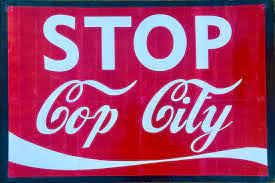
After my wrist surgery, my friends joked that I could be a cyborg Spiderwoman. Actually, Wonder Woman is my kind of hero. Seductive, voluptuous, and demanding, she throws the lasso of truth around villains and gets accountability. I would tie the lasso around the members of the Atlanta City Council who voted to fund Cop City.

I wish to ask why the Well Star hospital system was shut down in the City, but a privatized military training zone is being financed with public tax dollars. This question is particularly poignant for anyone who travels to downtown Atlanta. For the nearly three decades that my family has lived here, as you approach the City, Atlanta’s neediest people sleep in tents, strung up underneath the roaring highways overhead. The spillover effect of our broken system is evident everywhere. It is enough to make you wonder what strange America my family worked so hard to join. People experiencing poverty are routinely ignored, untreated, and criminalized. Meanwhile, those who went down to speak their minds at City Hall can spread hammocks between trees and choose to sleep under the stars with goose feather sleeping bags along a lake or in the mountains.

Swinging in Hammock Time

Posted in Uncategorized | 1 Reply

Messy Things

Advertisements

AKA feelings

Two days after my somber June 12th birthday, I was reunited with my cycling family in an epic parade. Though I am mobility-limited, I had the best birthday celebration ever. My friend Buddy, biker, burner, and human extraordinaire, arranged an artistic disco bike carriage to cycle me along on a special edition MidWeek Roll. An enormous effort was made to keep the arrangements secret, and the results were amazing. I was astonished. That night, I saw many familiar faces on the ride and replenished my spirit with plenty of hugs at Estoria. I was constantly asked these two questions in conversation: `How is your recovery going?` followed by `How is the pain?` Every day of recovery cannot be a disco ride and parade. It has now been a full month since my accident. I am, indeed, confronting tough pains. 

The nerves in my wrist, ankle, and jaw tingle sporadically. When it is awful, I pop a powerful pharmaceutical in my face, and after some time, that pain dissipates. The physical pain is manageable. The biggest pangs of pain have been harder to pinpoint. I feel a messy ball of painful emotions between my heart and spirit. There are no pills for that hurt.  Some feelings have familiar names: grief, sadness, longing, and anger. Within them, I feel all sorts of other unnamed knots. I grew up chastised for being too sensitive.  My sensitivity demanded a defensive push away from others who could be carelessly callous or cruel. For much of my childhood, I played alone. I would trespass neighbors’ yards and follow creeks and ponds across subdivisions. In nature, I found peace. My other solace was diaries. I managed big emotions early by writing, scribbling, and doodling. Since my accident, getting into nature and manually writing has been difficult. With my usual coping mechanisms harder to access, I am seeking new relief. 

In my first post, I alluded to flashbacks to my 2008 trauma. [TRIGGER WARNING: Suicide.] That was the other moment in my history when I was sideswiped by life. I was away at a hard-won internship at the World Health Organization in Geneva, Switzerland working on my dreams when I learned my father had passed away. I immediately returned to Atlanta for his funeral and discovered that my father had taken his own life. The emotional whiplash I had was called PTSD by my therapist.  Around the decade anniversary of my father’s death, I finally mustered the courage to try living abroad again. It was there, in Tokyo, that I first publicly shared the story of my father’s death. It took courage to talk about such delicate matters in public. Doing so opened the door for many others to share with me. I found many other ex-pats dealt with PTSD, depression, anxiety, and turbulent emotions. From their experience and mine, I learned the importance of proactively seeking help and developing healthy coping mechanisms. (Surviving that trauma also gave me faith in my inner strength. I have the emotional resources to live through anything else life throws at me). 

With this knowledge, and after a deep conversation with an emotionally intelligent cyclist in my midst, I started looking for a therapist soon after returning from the hospital. The hurdles to finding help are an indictment of our American healthcare system. To find a therapist covered by my insurance, I must have called 15+ providers. One group practice had me fill out a 27-page questionnaire BEFORE scheduling an appointment. Imagine if you were really depressed. How could you face so many questions before retiring in anger and disgust? Just looking at that number would be enough to turn me off. After honestly completing the questionnaire, I was rejected for an appointment. It took me about two weeks after that rejection to get the energy to call other hospitals and offices. Between the wrong numbers, disconnected lines, and `no longer in network,’ and a provider `who moved to Puerto Rico years ago,` I had an enormous search for the right therapist (who by this point was ANYONE who would talk to me).

Finally, about three weeks into looking, I had the opportunity to talk to a therapist. By chance, my first session was perfectly timed after a rough June 12th and before a huge celebration. I shared how I cried unexpectedly when a friend brought his bicycle into my living room. I discussed with the therapist the announced end of M+M’s Monday rides and my fear that I would be associated with canceling the city’s favorite group bike ride. I shared my frustrations from the sudden change from being an independent solo traveler to my current wheelchair-based movements.  There are no easy solutions to internal emotional pain. Still, a healthy container and space to talk about feelings make all the difference for me.

The contrasts between my past trauma and my current situation are stark.  When I returned to Atlanta from Geneva in 2008, I had no local support network. I stayed with my immediate family during that time, which exacerbated my tensions. Now, I have a world of support and my own residence. When I had PTSD, though my body was capable, I could not muster the emotional energy to go to nature. Now, at the very least, I can wheel myself to my back patio and watch sly squirrels squabble over bird food. I no longer turn to chemical enhancements to deal with emotional pain. I have learned the value of meditation and breathing techniques. Instead of writing with my right hand, I now use voice-to-text to create journal entries.

Anyone else could have been in my place during that freak accident on May 15th. Through discussions with witnesses of that incident, I know many others were traumatized by what they saw. One person suggested that this accident has brought a moment of reckoning to the Atlanta cycling community. As I have started to voice my medical and personal healing, old and new friends have unfurled their hearts with me. I consider these newsletters as a mutual form of relief. I learned that several others are going to therapy. I applaud anyone working to improve their inner lives. Ultimately, I welcome conversations about uncomfortable topics. As an empath, a constant mediator, and a liaison, I feel empowered to share my experience in the service of others. I know that my cycling community and I will rise from this situation. My spirit and the Atlanta group cyclists will mend our ways as my body repairs itself. I anticipate we will all emerge stronger on the other side of this crucible.

Head, Shoulder, Knees & Toes

Advertisements

Updates From Week of June 5

For me, the nursery rhyme could be updated as head, teeth, wrist, and ankle. Since my update last week, my physical condition has been improving. The idiom goes that time heals all wounds. However, with nuance and experience, I know that some wounds calcify. They turn hard and sharp and sometimes prick us unexpectedly…. In my townhouse, I have added a bright red corner desk facing the patio and a bird/squirrel feeder in the window.  My fridge has been stocked. I usually have at least three dessert choices and as many options in greens. Between the goodies in my fridge and the motley crew of visitors, spice, and variety are standards in my day. Nights, however, are a different story. I would welcome some boring days; sometimes, it feels like a plea. Could the world slow down a little bit? 

Dessert Dreaming (from my Tokyo days)

Only on Wednesday last week did I learn that my hand was more messed up than my leg.  This surprised my friends who saw my foot on the 15th.  During the last three weeks, Grady struggled to find a surgeon with time to work on my hand and wrist. Ultimately, I was assigned a surgeon at Emory’s Ortho Center, just 10 minutes from my home. On Friday, as I was being prepared for surgery and anesthesia, two nurses inquired how I ended up in their care bay. As I told them about my accident, they were both sympathetic.  The older nurse, who alluded to her years of wisdom in the profession, advised me to start suing all the parties involved. A deep dark cloud crossed my face. This is a really charged conundrum for me. I have lived my entire legal career avoiding personal injury practitioners. Nonetheless, that nurse was just one of three other medical providers who have also told me to do the same. 

Beyond this over-assertive help, the experience at Emory reminded me of what my Grady roommate Lola said. She said the staff at Grady neglected us; she had comparative experience. Now, so did I. At Emory, they did not drop medical equipment on my broken wrist. Nor did they destroy two of my flower arrangements. They also knew which doctor and which limb I had come in to work on. The Emory team even followed up with me within the time frames they said they would! Wow. I left there feeling we had mutual respect for each other’s time.


One of the cyclists on May 15th was a dentist. He reached out to ride organizers who relayed his offer to help me. Since I have had difficulties scheduling anything with an oral surgeon, I decided I might as well see the dentist first. Yesterday, at the dentist’s office, X-rays showed an ominous horizontal crack going through the top of the three teeth at the very front of my mouth. These will require a 3-D imaging tool that the dentist didn’t have. Meanwhile, I told the dentist that I wished to have my smile back, just at least for my birthday next week. The kind dentist created a composite on my front teeth, so I no longer appear to have come out of a bad bar fight. Though I’ve been advised not to eat hard apples with that front tooth, I can smile at people again!  I’ve never once gone to a dentist that was so gentle and kind. Even though his practice was over an hour away, I would actually go back to him by choice. The dentist comped the composite service and generously offered assistance after the additional imaging is done. For one reason or another, people have always told me they appreciate my smile. I used to grin inadvertently and shrug. It has been nice to return to smiling without pain. 


As I have always tried to do work that aligns closely with my heart, the most challenging part of this past week was being unable to participate in the second round of public comments about Cop City at city hall. I had been asked to return to work (after three unpaid weeks off) and could NOT justify asking someone for a ride downtown. This actually may have saved me a lot of trouble because while there is an elevator at City Hall, apparently, it was not working during the second public comments period (ADA issues, anyone?). Instead of attending in person after my work meetings, I watched the televised comments afterward. I watched for nearly 10 hours, napping for about 3 hours around midnight and then returning with some supernatural passion. I felt guilt (or something like being left out) when I saw friends, a familiar state legislator, and movement leaders participating at the podium. It stung that I couldn’t stand and say my piece there. I appeased myself by trying to tweet and spread the word.


On the 15th, when my accident happened, I had lined up for hours to be speaker number 218. After over 7 hours in the anxious line, I was tempted by the hubbub of the Atlanta Cycling Festival.  I wanted a tiny break and hoped to participate in the festival. I decided to join the festivities and return to City Hall after the ride. With little further deliberation, I left with a cyclist friend who just happened to be at City Hall and we rode up to the Georgia Beer Garden together. Ultimately the council members voted as they were suspected to.  Still, the lost opportunity stings. I chose to leave City Hall on May 15 and ride up to the Georgia Beer Garden. What if I hadn’t?


While my accident did not kill me, I suspect my friends are trying to kill me with kindness. After taking me to the dentist yesterday, my friend Buddy took me (and two other friends) to see a hilarious adult puppet show with Leonardo De Vinci as a crime-fighting hero. In one scene, Da Vinci rides a bike and smashes the villains with wheelies. Our whole crew laughed at this inside joke. If you will do tricks, at least smash a bad guy. Pre-wrist surgery, one friend painted my fingers with sparkles and glitter. Another sweet heart brought me hand-picked flowers and homegrown greens. Next week, I anticipate multiple opportunities to shine my fancy dental work around.

Posted in Uncategorized | 1 Reply

Between Community and Freedom

Advertisements

My health update and safety on group rides

As I lay on the asphalt after my bike accident, I focused my attention on breathing. This meditation technique helped me maintain composure and consciousness. While I was trying to breathe, a man, a NOT-good-man (in my opinion), was leaning on me and putting his arm across my body. I shudder as I remember the feeling of his weight and body heat on my torso while I struggled to stay calm. Unlike the other Good Samaritans helping me, his presence terrified me. We had chatted once before on a ride, but I did not appreciate his aura and chose never to engage with him. I still do not understand why he believed he had the privilege to lean across my body and put his weight on me…especially after such an enormous trauma. As I reflect on it, I feel small and sad.  

I separately told two familiar men around me that I didn’t like this NOT-good-man and that I needed him to get away. I was relieved when I saw that my superhero friend Shannon, the Army Veteran medic, had shown up. She had also dealt with the creepiness of this NOT-good-man. Anyone that knows her will appreciate that she is a force to reckon with. After multiple verbal warnings, he finally backed away. Shannon took his spot and nuzzled me in an act of genuine affection that I am likely to remember my entire life. With her there, I returned to channeling my energies for what lay ahead. Her actions embodied the proactive community care that I wish to see within my community.

Since my post last week, I have been to the hospital three times. A friendly face from my WhatsApp group transported me to and fro each time. I have learned that my ankle was fully dislocated and that at least three bones are out of wack in my wrist. I have surgery on Friday where a metal plate and three screws will enter my wrist through an incision. Each of my limbs is out of commission for 6-8 weeks. I have been advised to lay horizontally and elevate my tattered right-side limbs. Besides sleeping, I like doing only one activity, mostly horizontal. Alas, I will be learning to read and brood with my limbs above my heart level.

For the last week, I have had an uncountable stream of visitors. My fridge is full, and my heart overflowing. One silver lining here is that I can see how beautiful the Atlanta cycling community is. While I anticipate a change in the rush of support, I know that I am surrounded by loving people. For this reason, I also wish to galvanize some conversations around the etiquette and considerations in organized group rides. So far, some ride leaders have already taken a proactive approach to addressing ride guidelines. This affirmative change feels like putting safety first. 

While no one can force another to act, it speaks to the character and content of leadership to make responsible, forward-thinking choices. The weekly ride M+M (where I was injured) has grown quickly to become Atlanta’s most popular group ride. However, in a post after my accident on their ride, it appears that the ride organizers are pointing to individual riders to be better while ignoring the importance of verbalizing and maintaining safety protocols from the ride’s creators. This reminds me of a few poignant examples: (1) the story of Frankenstein, who was rejected by his creator, (2) the story of Facebook and its rapid growth, and (3) the 80`s film Little House of Horrors where a blood-drinking plant demands more and more from his creator. Each of these illustrates the drama and tension in creating a monster.

As Shannon alerted a series of other people about the actions of the NOT-good-man, I believe we should discuss prospective dangers within our community. One veteran cyclist pointed out that while we alert one another about cars and obstacles on the road, we do nothing to protect each other from dangerous, reckless, or irresponsible riders. Now is the time to take a hard look at the balancing act between community safety and individual freedom. I do not pretend to know all (or any) of the answers. I do know, however, transparency is key. Online, I noticed that many fellow riders were looking for answers and details to learn from my tragedy. In the echoing, vague silence of M+M, I wrote a detailed description of the circumstances surrounding my fall. 

Since prevention is better than cure, I’ve already signed up to talk to a therapist. The salty part of my circumstances is that I find myself in a community where I belong for the first time in a really long time. I’m not trying to fit in; I know that I belong. These tender new relationships are asking to blossom. I had hoped to spend the summer season frolicking with my new friends. Yet, I will remain mainly horizontal and indoors for the next few months. As we know, time never comes back. My bike will remain in the shop this season, and my kayaks will remain dry in the closet.

By the time I am ready to ride, however, I have faith that this community and her faithful riders will have developed a deeper awareness of keeping one another safe. A few cycle hooligans have already made their stance clear online. Some comments indicate that rough riders will quit group rides. For them, a classic reminder would be helpful. U.S. Supreme Court Justice Oliver Wendell Holmes Jr. describes freedom as “your right to swing your arms ends just where the other man’s nose begins.” In our case, your right to be Mad Max ends just before your bike (or body) collides with mine.